


Recently, a research team from the Anhui Institute of Optics and Fine Mechanics, Hefei Institutes of Physical Science, Chinese Academy of Sciences, developed a fast, multi-platform compatible detection network that can "see" gas leaks in three dimensions.
The results have been published in Environment International and Remote Sensing.
Gas leaks have caused frequent fires and explosions, drawing increasing attention to detection and monitoring. Existing gas remote sensing systems are typically limited to two-dimensional projections and cannot quickly provide key 3D information, such as gas volume, distribution, diffusion, and source location.
To tackle this, the team focused on gas species identification, leak localization, and accurate volume quantification. For rapid leakage scenarios, they built a multispectral imaging system that integrates infrared detectors, lenses, and motorized components. Using the YOLOv10 model, the system achieves real-time detection at over 25 frames per second, and combined with a non-axisymmetric inverse Abel transform, 3D reconstruction completes within 200 milliseconds. Simulations show a PSNR of 25.633 and SSIM of 0.940, demonstrating high reconstruction accuracy.
For large-scale gas plumes, the team developed the ZK-FTIR-GS1000 imager and a deep learning-based 3D reconstruction network. Using octree representation, the network reconstructs gas clouds from coarse to fine resolution with minimal computational resources. Field tests show it effectively captures the spatial location and distribution of gas leaks, making it suitable for large-scale applications.
This work provides robust tools for rapid 3D detection and spatial reconstruction of gas leaks, offering strong technical support for environmental monitoring, emergency response, and industrial safety.
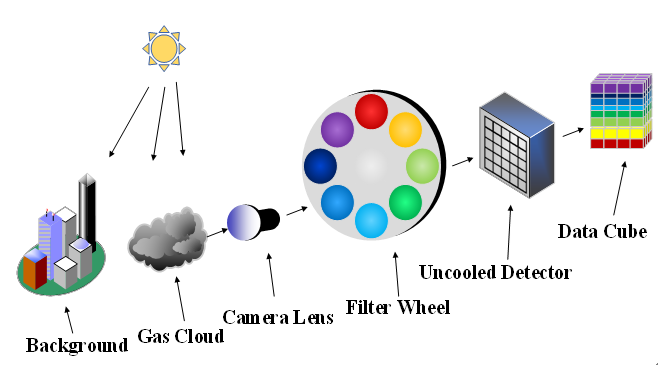
Figure 1. Schematic diagram of the multispectral imaging system (Image by XU Liang)
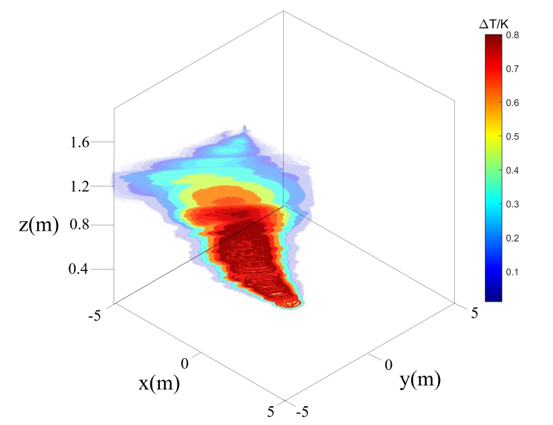
Figure 2. Gas 3D reconstruction results (Imge by XU Liang)