A research team led by Associate Prof. MA Kun at the Hefei Institutes of Physical Science, Chinese Academy of Sciences, has developed a magnetic-field-assisted method to produce ultrasmall gadolinium oxide (GdOx) nanoparticles with abundant oxygen vacancies, enhancing their performance as T1-weighted magnetic resonance imaging (MRI) contrast agents.
The study was published in Nano Letters.
MRI contrast agents need to provide strong imaging signals while maintaining good safety. Oxygen vacancies can improve the magnetic properties of metal oxide nanoparticles, but creating and controlling these defects in ultrasmall particles is difficult.
The researchers introduced a 3 T steady magnetic field during the synthesis of GdOx nanoparticles. The field altered the crystal growth process and promoted the formation of oxygen vacancies on the particle surface.
The GdOx nanoparticles were about 2.29 nm in size, with a surface oxygen vacancy density about 3.5 times higher than that of conventionally synthesized samples.
The increased oxygen vacancies also changed the magnetic behavior of the nanoparticles, helping improve their interaction with surrounding water molecules. The GdOx nanoprobes showed about 1.7 times higher T1 relaxivity than conventional Gd₂O₃ nanoparticles.
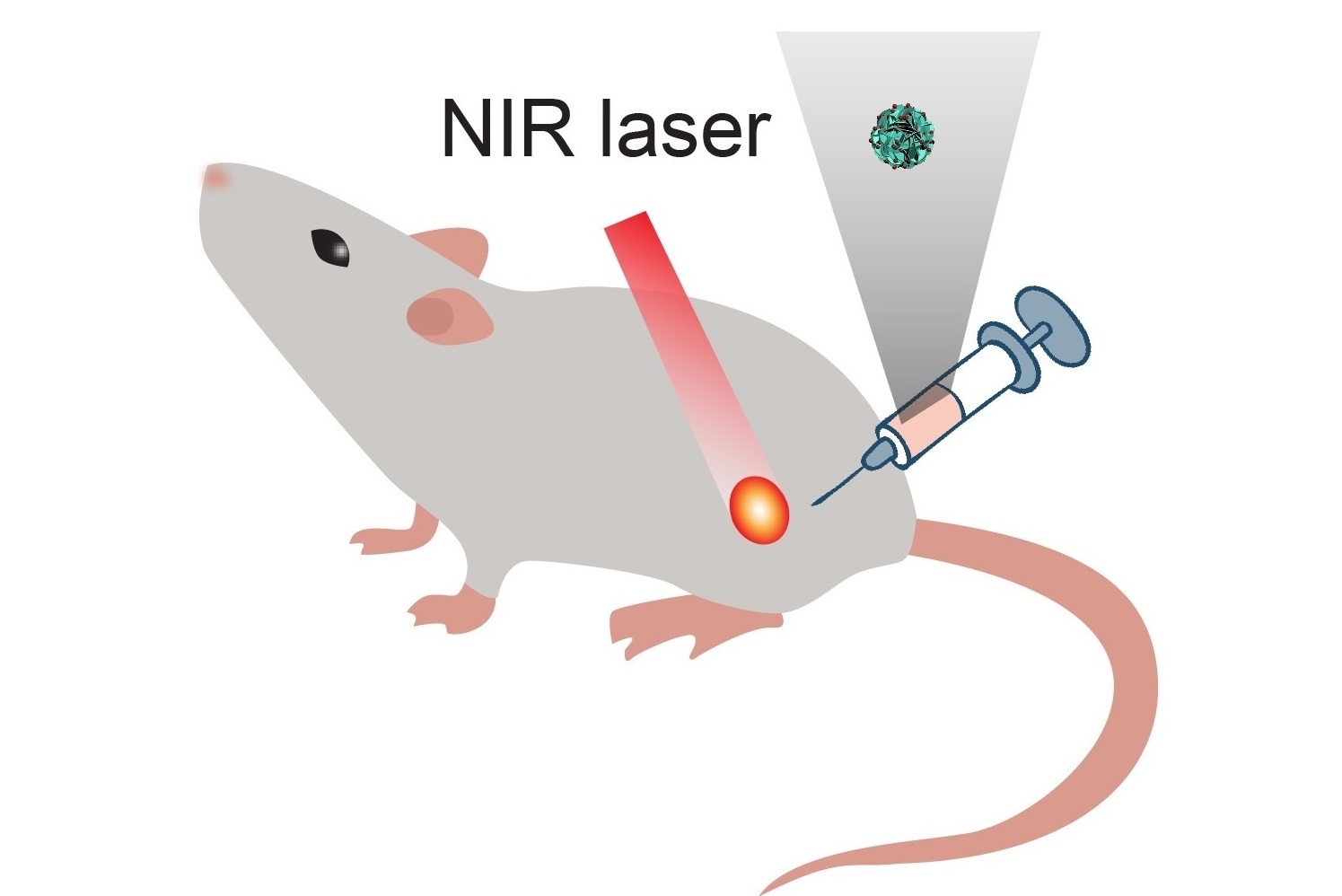
In tests on tumor-bearing mice, GdOx produced stronger and longer-lasting T1-weighted tumor contrast than the clinical contrast agent Gd-DTPA and control samples. The nanoprobes also performed well in vascular imaging.
Safety tests showed no evident liver or kidney toxicity, with little gadolinium released from the nanoprobes.
The approach could provide a new way to develop high-performance MRI contrast agents and other functional nanomaterials.
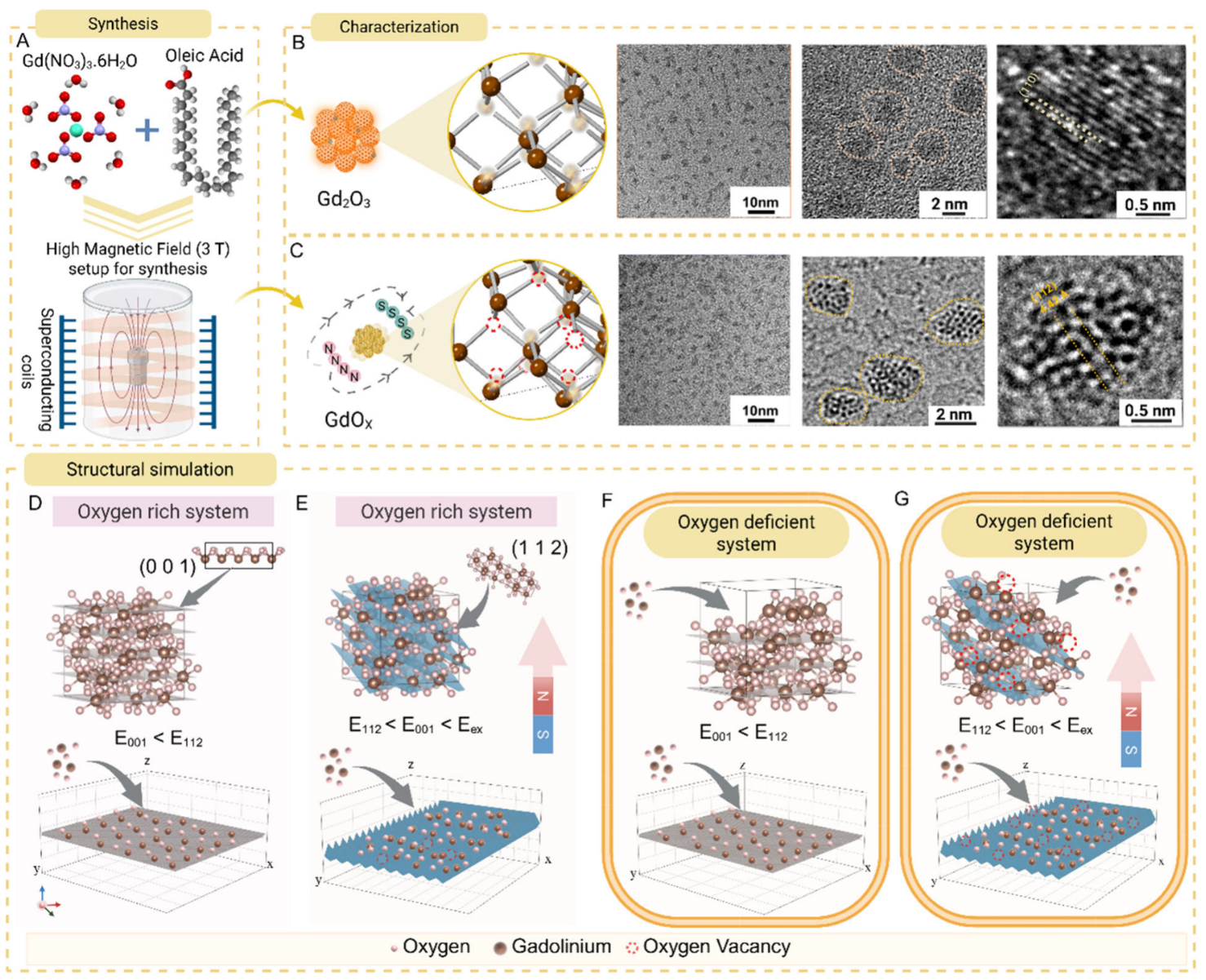
Magnetic field-mediated growth changes the preferred orientation of GdOx nanoparticles from (001) to (112) (Image by MA Kun)
![Schematic illustration of (a) the preparation of Mn3[Co(CN)6]2@SiO2@Ag and (b) the delivery process of these Dox-loaded Mn3[Co(CN)6]2@SiO2@Ag to A549 cells for enhanced fluorescence imaging](../../../news/Events/201601/W020160122330206981460.png)