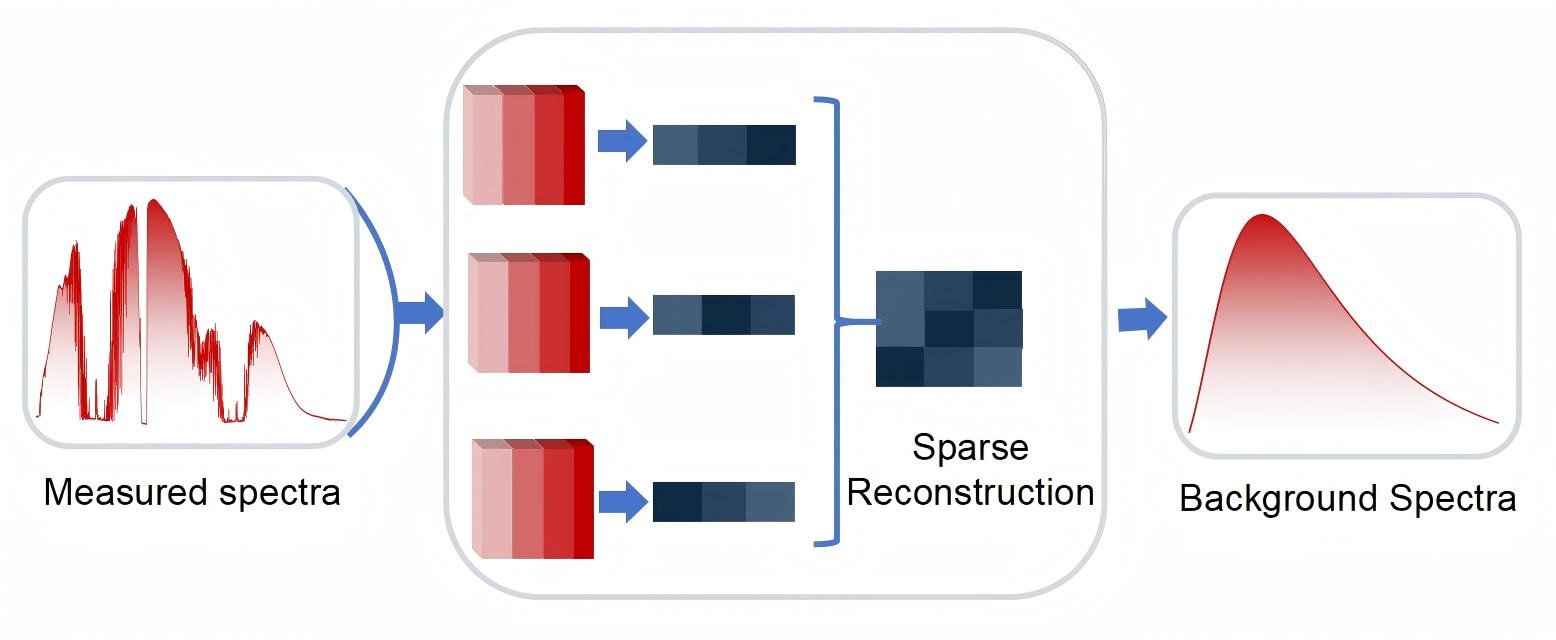
A research team from the Hefei Institutes of Physical Science of the Chinese Academy of Sciences Chinese Academy of Sciences, has developed a comprehensive algorithm framework that dramatically improves the accuracy, robustness and dynamic-range performance of Fourier Transform Infrared Spectroscopy (FTIR) for gas analysis.
The work delivers advances in four key areas, mixture identification, baseline reconstruction, concentration inversion and adaptive band selection.
The results were published in Analytical Chemistry and Optics Express.
FTIR spectroscopy is widely used in environmental monitoring, industrial emission analysis and national security, but real-world measurements are often limited by overlapping absorption features, instrument differences, nonlinear responses at high concentrations and baseline drift. The AIOFM team designed their methods to directly address these long-standing challenges.
One highlight of the research is a deep-learning model that significantly improves mixture identification across different instruments. Trained on data from only one instrument line shape, it maintained more than 91% accuracy on nine unseen line shapes, showing strong potential for cross-device deployment.
To correct hidden baseline distortions in mixed-gas spectra, the team introduced a Relative-Absorbance ICA method, which reconstructs baselines with higher accuracy than commonly used techniques while preserving fine baseline structure important for multi-component detection.
For gas quantification, the researchers developed "Suppression–Adaptation–Optimization" model that integrates noise reduction, residual modeling and adaptive loss optimization. Tests showed that it improves concentration inversion accuracy for CO₂, N₂O and CO by about 15% under noisy conditions.
Finally, their Information Density-based Adaptive Band Selection method enables FTIR systems to choose optimal spectral regions automatically. Validated using methane, it demonstrated a wide linear dynamic range, greatly extending FTIR' s capability in high-concentration scenarios.
These advances provide a stronger foundation for using FTIR in complex environments and improving its performance in gas analysis.
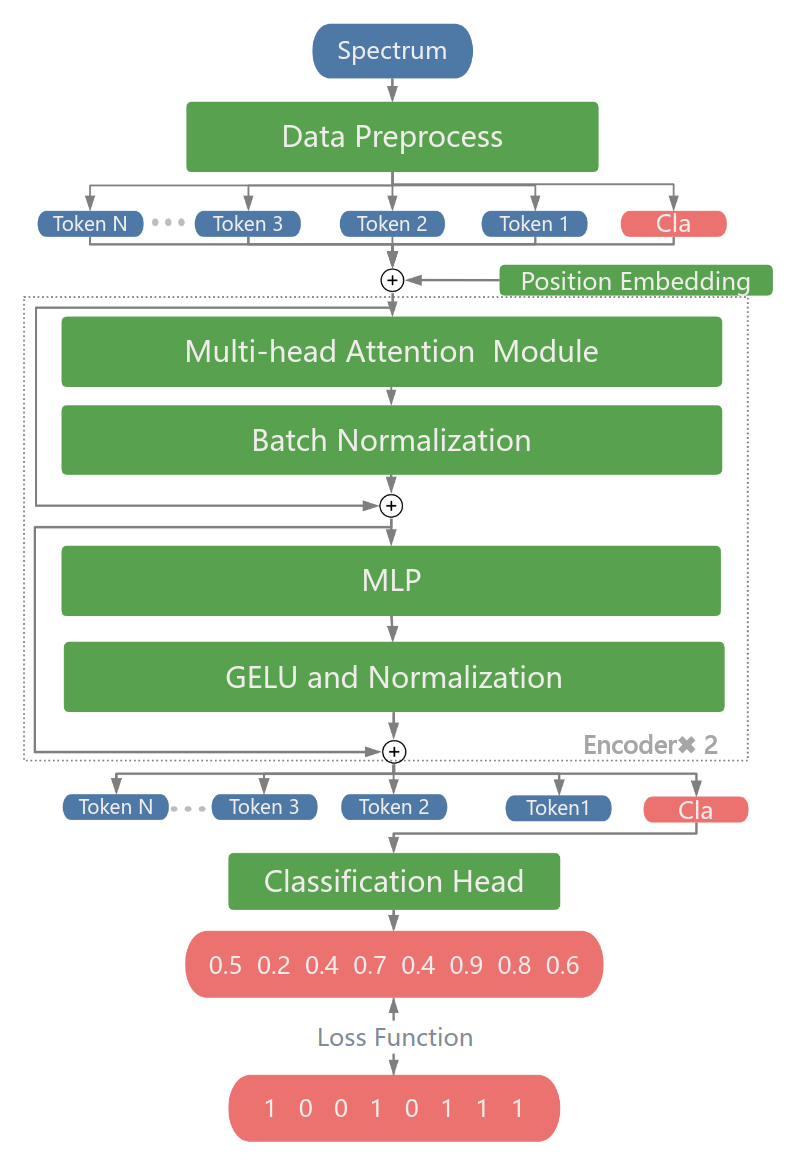
Deep learning network based on an attention mechanism for mixture identification (Image by XU Tairan)
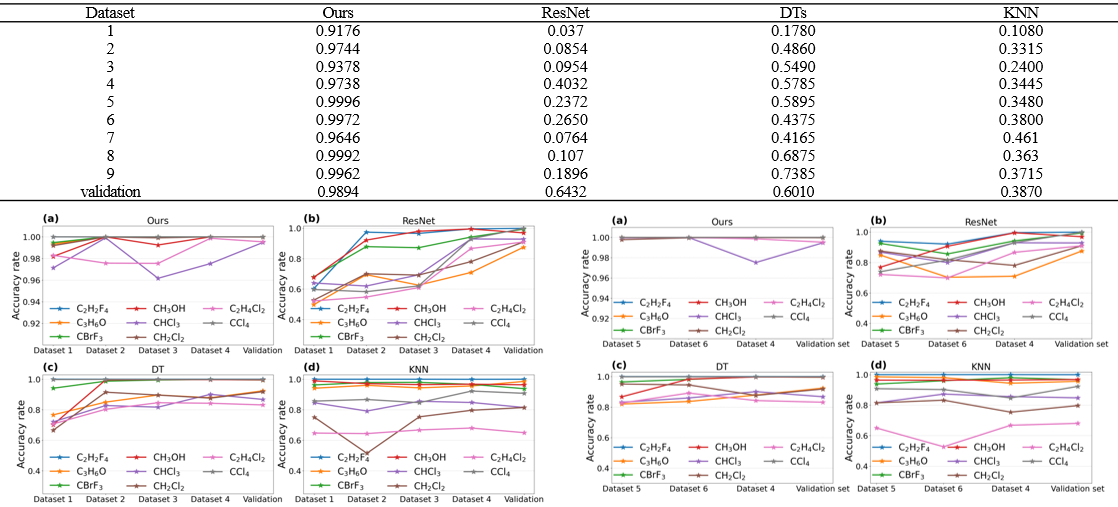
Performance comparison of the attention-mechanism-based deep learning network and existing methods in terms of identification accuracy for complex mixtures (Image by XU Tairan)