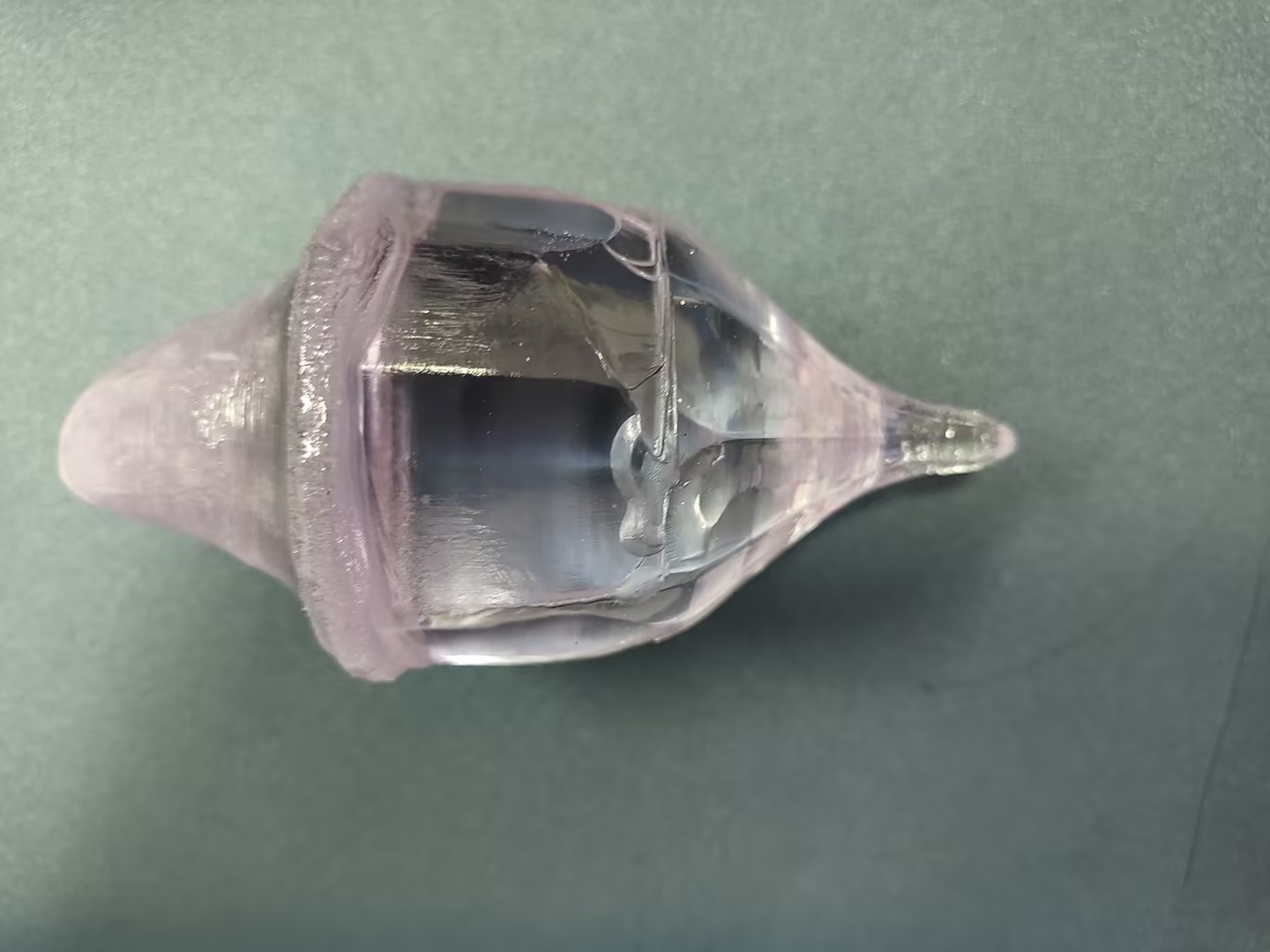
A research team led by Prof. SUN Dunlu from the Hefei Institutes of Physical Science of the Chinese Academy of Sciences have developed a high-energy mid-infrared laser that achieves record pulse energies among laser diode (LD)-pumped Er3+-doped solid-state lasers operating at 2.7 μm.
The results were published in Optics Express.
Mid-infrared lasers at around 2.7 μm have potential applications in medical treatment, manufacturing, and other fields. Achieving high-energy output in this wavelength range, however, remains difficult. Most existing high-energy lasers use xenon-lamp pumping, which suffers from efficiency and thermal limitations. Although LD pumping provides a more compact solution, obtaining high pulse energy has been a major challenge.
The team designed a novel gain medium—Er,Pr:GYAP—through the introduction of Gd³⁺ and Pr³⁺ ions into the YAP lattice. The crystal helps improve laser performance by expanding the emission range and reducing energy losses during operation.
Using this crystal with LD side pumping, the researchers achieved free-running pulse energies of 1.21 J and 0.94 J with bonded and unbonded crystal rods, respectively. In Q-switched operation, the laser produced a pulse energy of 125 mJ, with a pulse width of 33.55 ns, and a peak power of 3.7 MW.
These results demonstrate the potential of LD-pumped Er3+-doped solid-state lasers for achieving high-energy output at the 2.7 μm wavelength.
This work provides a new approach for developing high-energy mid-infrared lasers with potential applications in medicine and manufacturing.
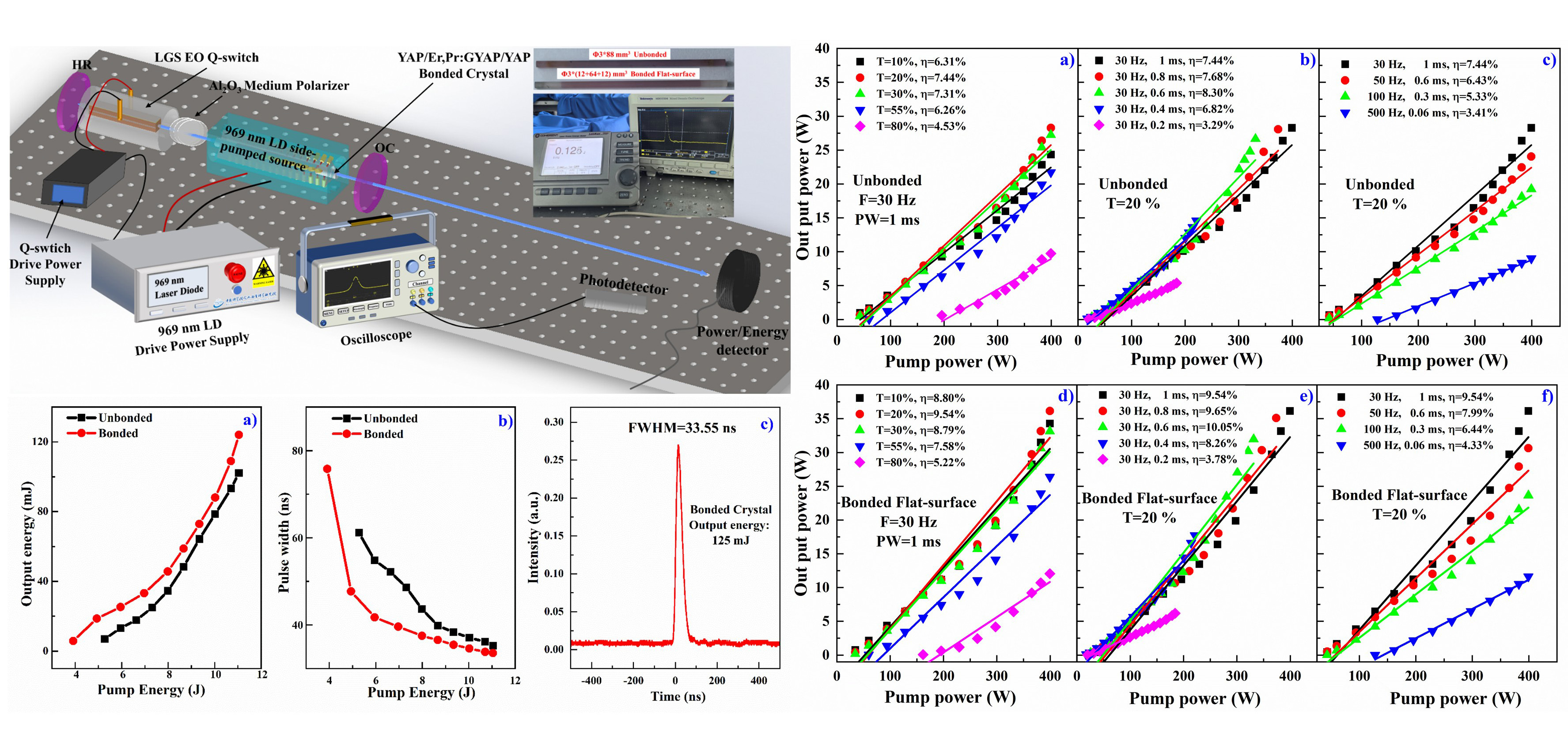
Summary diagram of 2.7 µm high-energy mid-infrared Er,Pr:GYAP laser (Image by QUAN Cong)