Recently, a research team led by Prof. ZHAO Bangchuan from the Institute of Solid State Physics, Hefei Institutes of Physical Science, Chinese Academy of Sciences, in collaboration with Prof. XIAO Yao from Wenzhou University, developed a composition gradient strategy to precisely regulate the internal stress distribution and electronic structure of Li-rich Mn-based cathode materials.
The findings were published in Nano Letters.
Li-rich Mn-based oxides are promising cathode materials for next-generation lithium-ion batteries because they can deliver high energy density through combined anion–cation redox reactions. However, the involvement of lattice oxygen in this process can cause problems such as structural degradation, voltage decay, and slow reaction kinetics. Therefore, understanding and controlling oxygen redox behavior is key to improving the long-term performance of these materials.
In this work, the researchers designed a Li-rich Mn-based oxide with a carefully engineered concentration gradient structure. By gradually adjusting the elemental distribution from the interior to the surface, the team effectively mitigated internal stress accumulation during lithium insertion and extraction. This design significantly enhanced the structural integrity of the material during repeated charge–discharge cycles.
To further uncover the atomic-scale mechanisms, the team employed in situ magnetic characterization techniques to monitor the evolution of magnetic and electronic states in real time. The results showed that the gradient structure helps stabilize orbital interactions and suppress undesirable oxygen-related side reactions, thereby improving the reversibility of oxygen redox processes.
As a result, the gradient-engineered cathode material exhibits markedly improved cycling stability and rate performance, demonstrating both high capacity and strong long-term durability.
This work offers important theoretical insights for the design of high-energy-density Li-rich cathodes and supports the development of advanced lithium-ion batteries, according to the team.
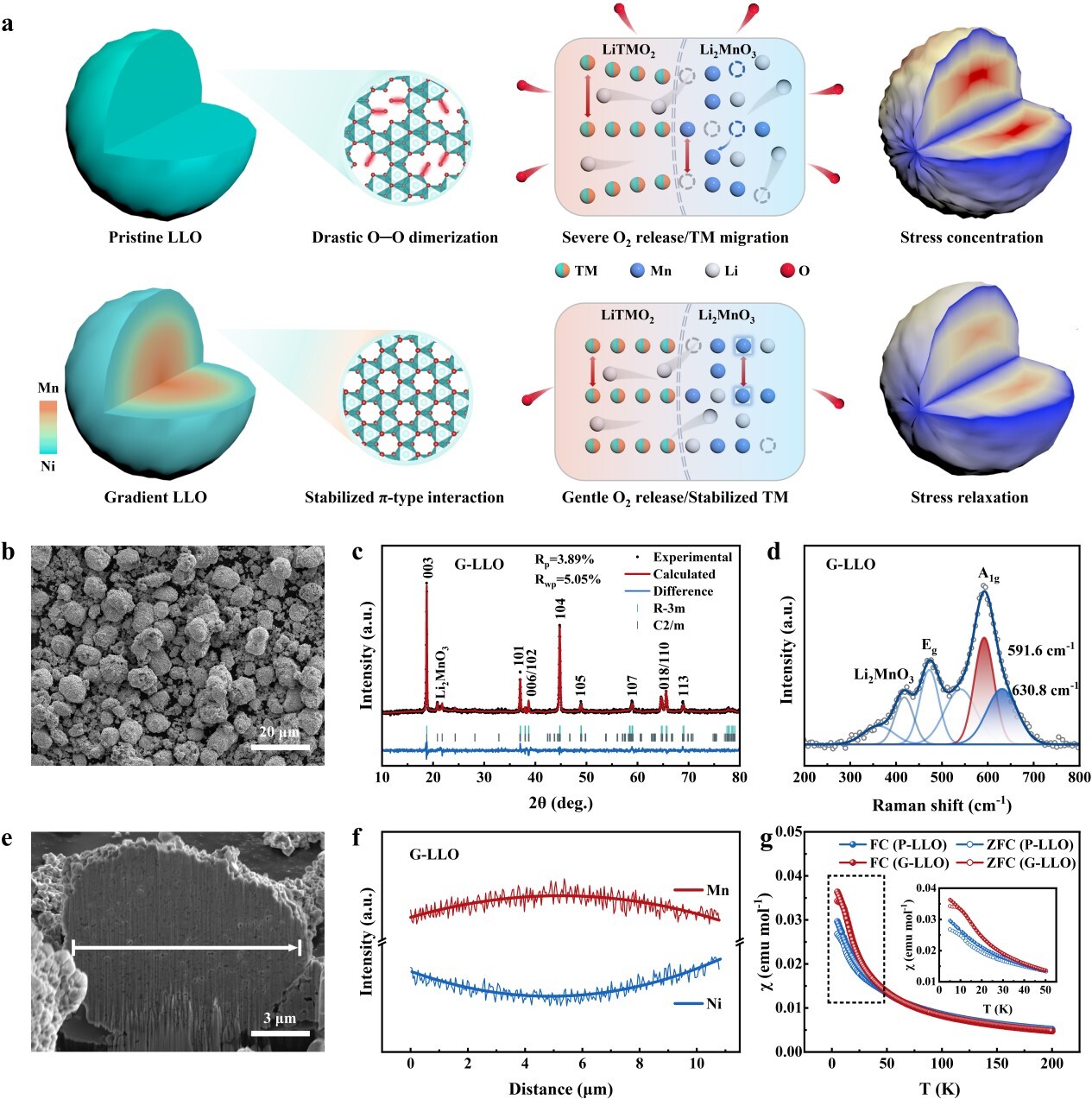
Comprehensive structural characterization of the gradient Li-rich Mn-based material. (Image by QIU Shiyu)
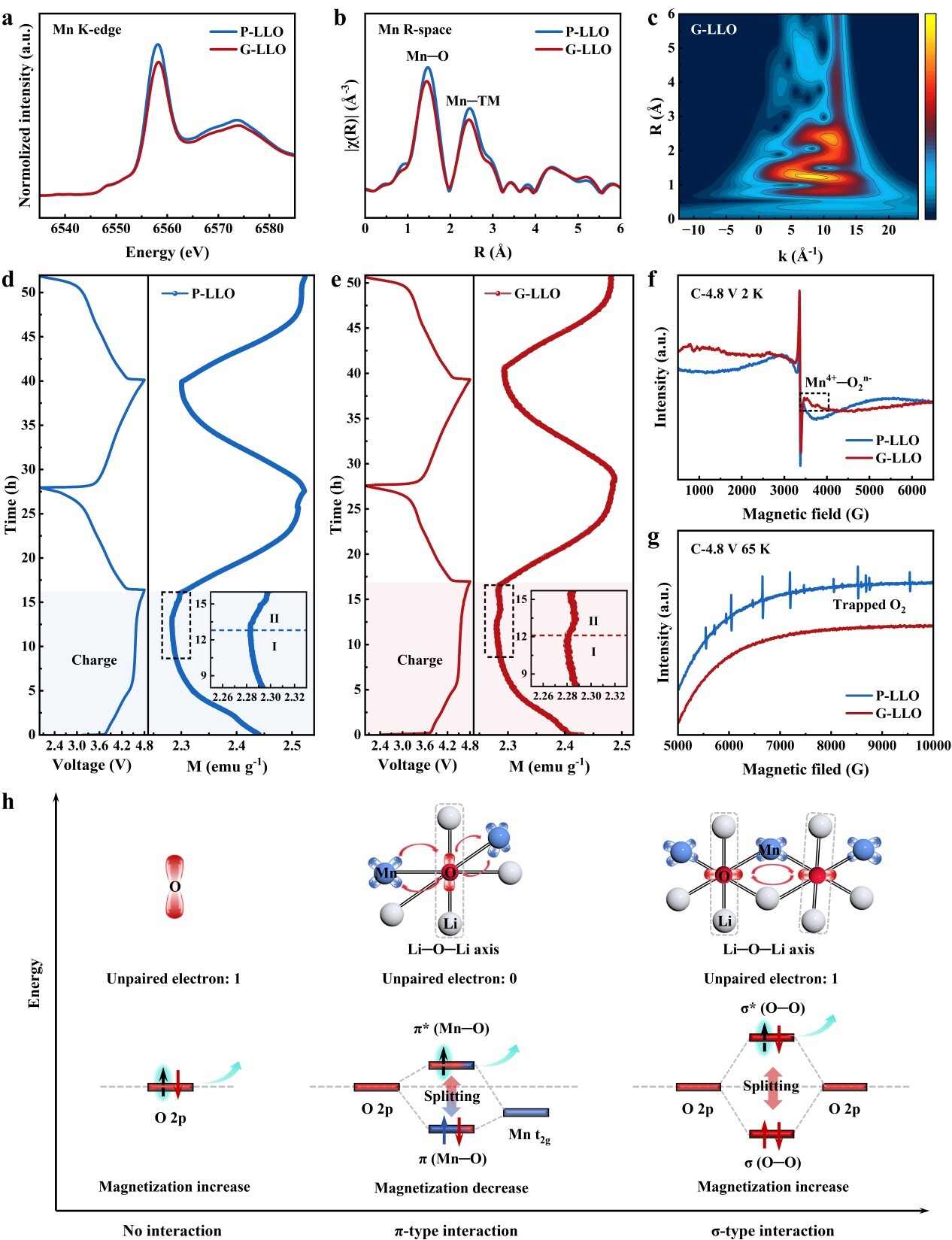
Magnetization evolution and reaction mechanism in gradient Li-rich Mn-based material. (Image by QIU Shiyu)