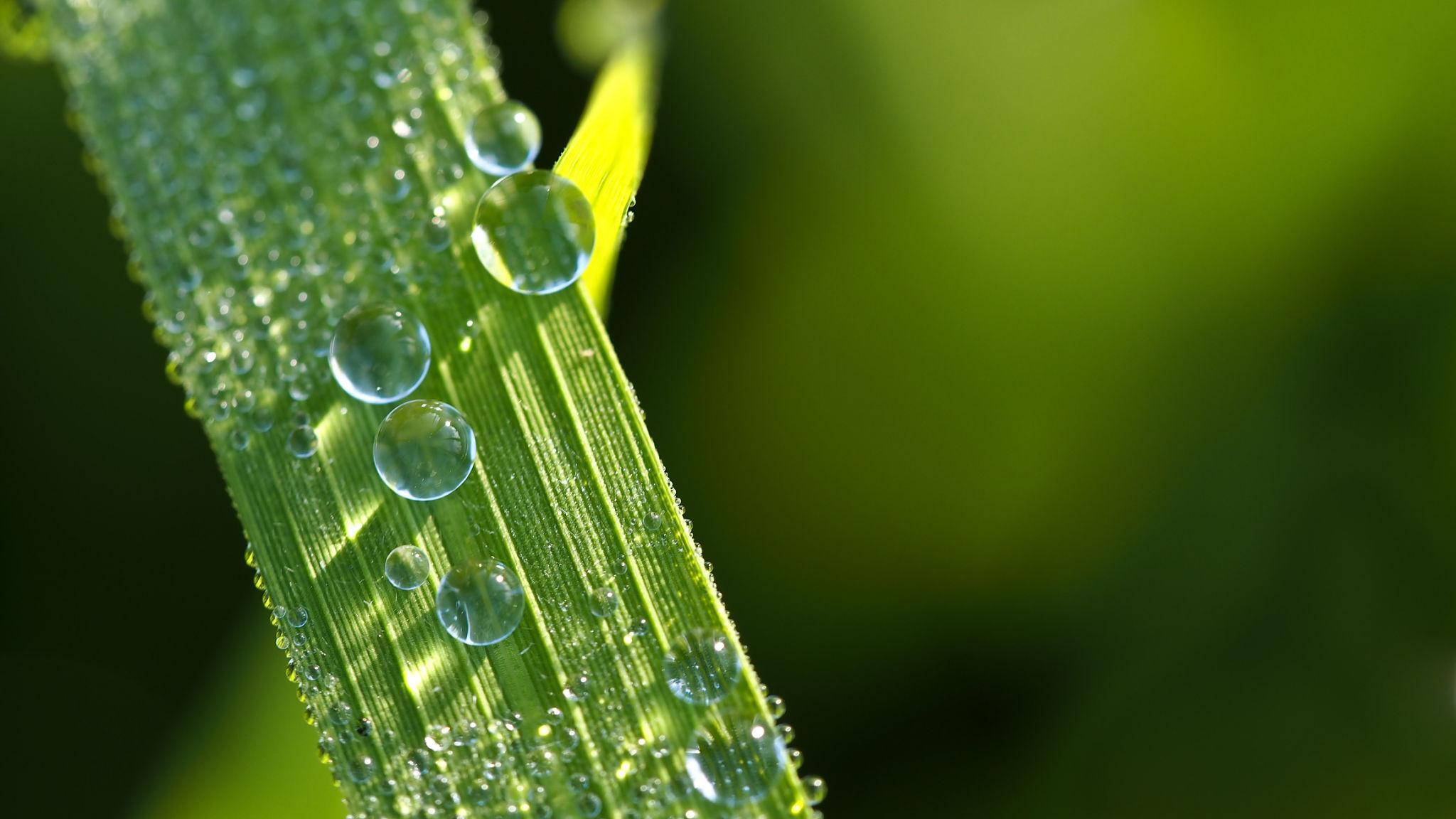
Rice leaves are great at repelling water. That's good for the plant, but not so good for fertilizer.
Rain helps rice grow, but it can also wash away fertilizer sprayed onto its leaves. And rice leaves make the problem even trickier.
Their waxy coating and tiny surface structures make them naturally water-repellent. Water droplets tend to bead up and roll away rather than spread out and stay put. Unfortunately, fertilizer droplets can do the same.
So, how do you get fertilizer to stick to a leaf that seems determined to shake it off?
Researchers from the Hefei Institutes of Physical Science of the Chinese Academy of Sciences came up with a tiny solution: nanoparticles.
The team developed a nitrogen-based foliar fertilizer using silica nanoparticles, along with an additive called sodium dodecylbenzenesulfonate (SDBS). The additive helps fertilizer droplets spread across rice leaves instead of shrinking into beads or bouncing off. Once the droplets dry, the silica nanoparticles help the fertilizer adhere more firmly to the leaf surface.
But does it work when the rain comes?
In simulated rainfall experiments, the treated rice leaves retained 71.33% of their nitrogen after two rounds of rain. That's better than conventional foliar nitrogen fertilizer.
The results in the field were promising, too. When the new foliar fertilizer was combined with soil fertilization, rice yield increased by 17.5%, while total nitrogen input was reduced by 10%.
Sometimes, a tiny droplet can make a big difference.