A research team led by Prof. YANG Wulin at the Hefei Institutes of Physical Science, Chinese Academy of Sciences, has identified fundamental metabolic differences between hepatocellular carcinoma (HCC) and benign liver regeneration. The work also demonstrates that jointly targeting key metabolic enzymes and vitamin A metabolites produces stronger anti-tumor effects than current targeted drugs such as sorafenib.
The findings were published in Biological Macromolecules.
HCC remains one of the most prevalent cancers worldwide, and its rapid proliferation relies on metabolic programs that differ markedly from the processes involved in normal liver repair. These distinctions, combined with the limitations of existing treatments—including drug resistance and adverse effects—highlight the need for more precise therapeutic strategies.
In the study, the researchers compared gene expression profiles between liver cancer cells and regenerating liver cells. They identified six metabolic enzymes that are consistently upregulated in HCC. These enzymes support the accelerated biosynthesis of macromolecules essential for tumor growth. Among them, ACLY, G6PD, and TYMS—three upstream enzymes—were found to play central roles and were designated as potential “golden targets” for intervention.
The team also discovered disruptions in the retinol (vitamin A) metabolic pathway in cancer cells, leading to depleted levels of retinoic acid, a molecule known to restrict the self-renewal capacity of cancer stem cells.
Based on these findings, the researchers designed a dual-modality treatment strategy. By inhibiting the three metabolic enzymes, they aimed to reduce the biosynthetic drive of cancer cells; by supplementing retinoic acid, they sought to limit stem-cell-like regeneration. In vitro assays and animal experiments showed that this combined approach more effectively suppressed tumor growth than sorafenib.
"This approach could guide future research on metabolism-related cancers," added YANG, "though clinical studies are still needed to determine whether it can be developed into new therapies for liver cancer."
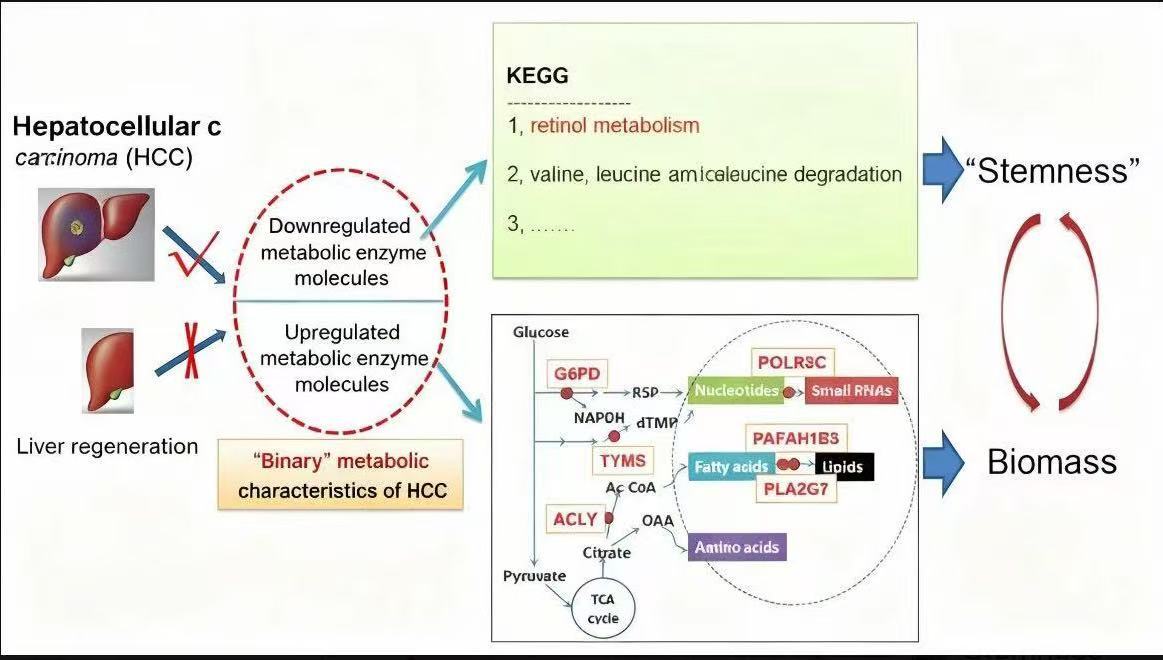
Studies have identified a unique "binary" metabolic characteristic in HCC that is associated with the malignant proliferation of cancer cells. (Image by YIN Ke)