



Recently, a research team led by Prof. KONG Lingtao at the Institute of Solid State Physics, the Hefei Institutes of Physical Science of the Chinese Academy of Sciences developed a new Metal–Organic Framework (MOF)-based material capable of efficiently removing fluoride ions from water while providing real-time visual detection.
This breakthrough addresses key limitations of conventional defluoridation methods, which often suffer from low efficiency and separate processes for removal and monitoring.
The results were published in Separation and Purification Technology and Chemical Engineering Journal.
Fluoride ions are a common water pollutant. While moderate levels are beneficial to human health, excessive fluoride can cause dental and skeletal fluorosis, posing risks to people and ecosystems. MOFs, with their high surface area, tunable porosity, and unique optical properties, have emerged as promising materials for water purification.
To enhance fluoride removal, the researchers regulated the surface structure of MOFs using interfacial water, creating materials with optimized crystal facets that significantly improve adsorption.
They further developed an integrated dual-metal MOF, which can simultaneously capture fluoride ions and provide a visible fluorescence signal. Based on this material, a visual defluorination device was constructed, enabling real-time monitoring and efficient fluoride removal.
This series of studies not only advances the understanding of MOF design and functionalization but also promotes the application of MOF-based materials in practical water treatment, offering new solutions for the remediation of fluoride-contaminated water.
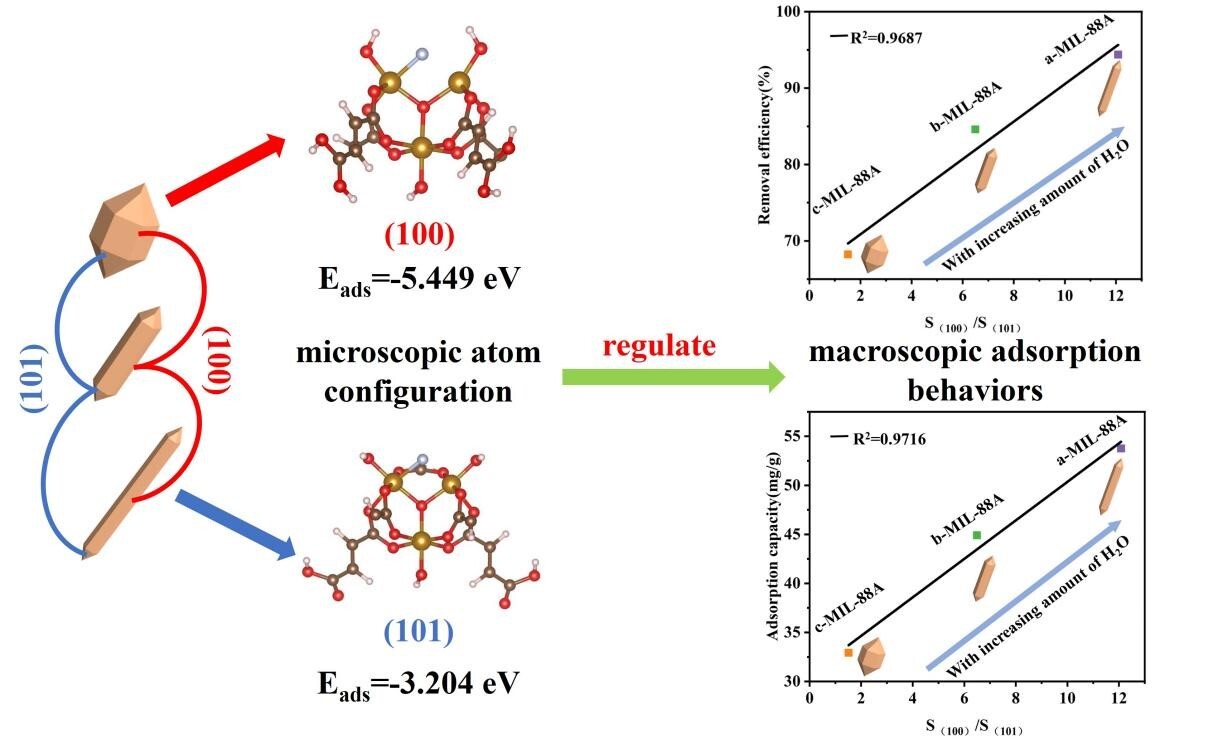
Fig. 1. Surface-specific adsorption of fluoride on the (100) and (101) crystal facets of MIL-88 A(Fe) regulated by interface water. (Image by HE Junyong)
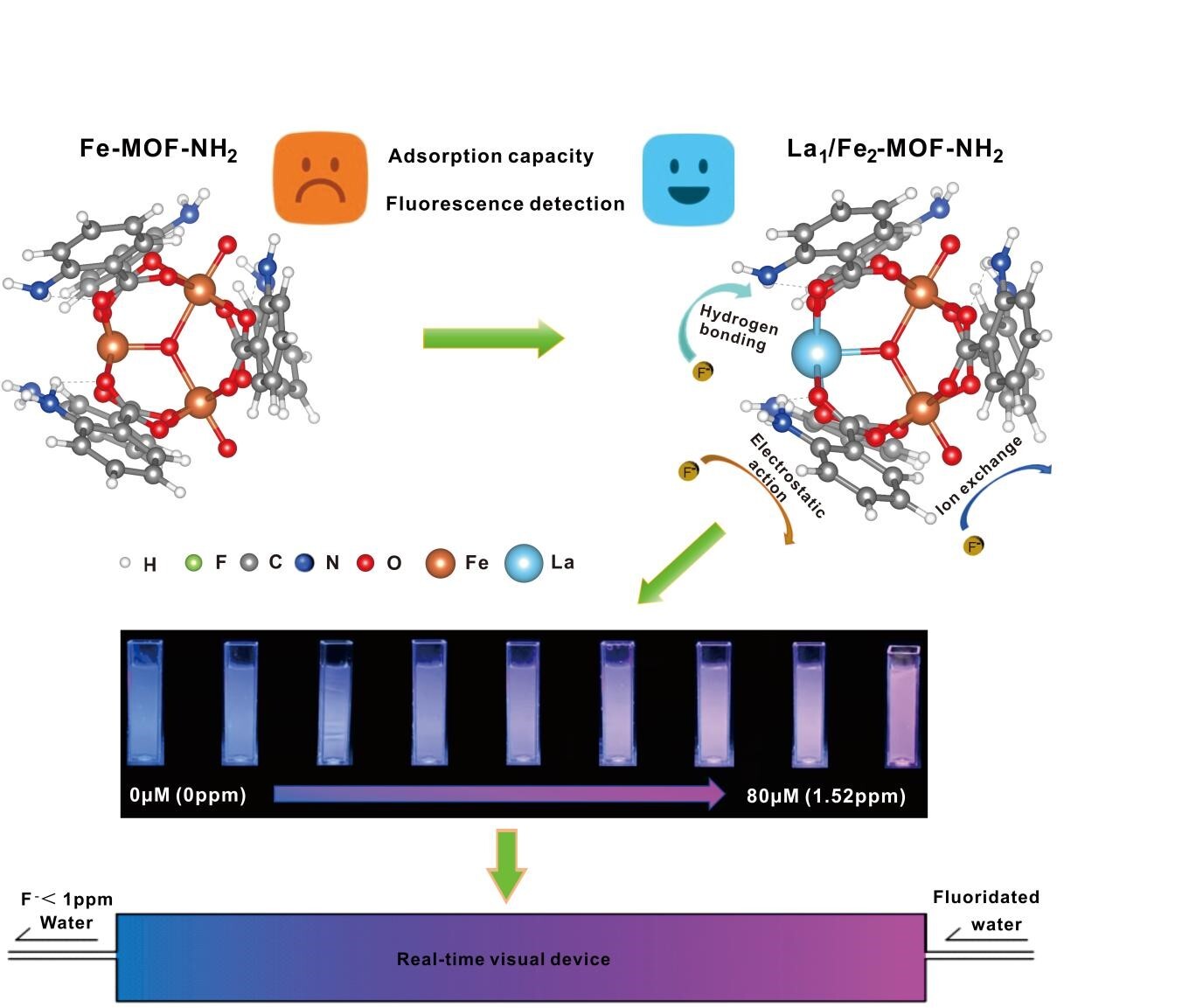
Fig. 2. Visual removal of fluoride ions by La1/Fe2-MOFs-NH2. (Image by HE Junyong)