A research team led by Prof. ZHANG Tianshu at the Anhui Institute of Optics and Fine Mechanics, Hefei Institutes of physical Science, Chinese Academy of Sciences, has successfully developed a low-stress electro-optic switch based on large-aperture β-BBO slab crystals and integrated it into a Nd:YAG hybrid-cavity Innoslab laser system.
The research results, published in Optics Express, address long-standing challenges in high-energy laser systems, particularly those related to switching modulation consistency and operational stability.
High-energy, high-repetition-rate laser systems place demanding requirements on electro-optic switches, which must withstand significant thermal and mechanical stresses. These factors can adversely affect modulation performance and beam quality, presenting a key challenge to achieving stable, high-quality laser output.
In this study, the team introduced a low-stress packaging design and improving electric-field uniformity, achieving enhanced electro-optic modulation performance. As a result, the Nd:YAG Innoslab laser delivered stable, high-energy pulsed output under both continuous and pulsed pumping modes, while maintaining near-diffraction-limited beam quality.
In parallel, the researchers employed a stable–unstable hybrid cavity configuration and optimized the matching between the pump beam, slab laser crystal, and Q-switch to effectively mitigate thermal effects that typically limit laser performance. Combined with investigations into beam homogenization and high-speed electro-optic modulation, these advances enabled precise control of laser operation and further improved the compactness and overall performance of high-power laser systems.
This achievement lays a solid foundation for future applications, including high-repetition-rate laser sources and satellite-based lidar systems, and represents an important step forward in high-energy laser technology, according to the team.
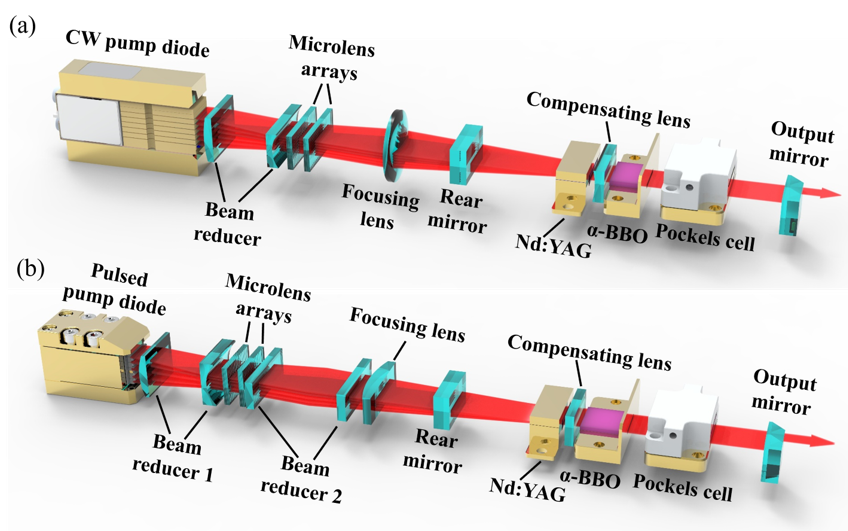
Fig. 1. Schematic of hybrid Innoslab laser system. (a) CW pumping. (b) Pulsed pumping. (Image by CHEN Jinxin)
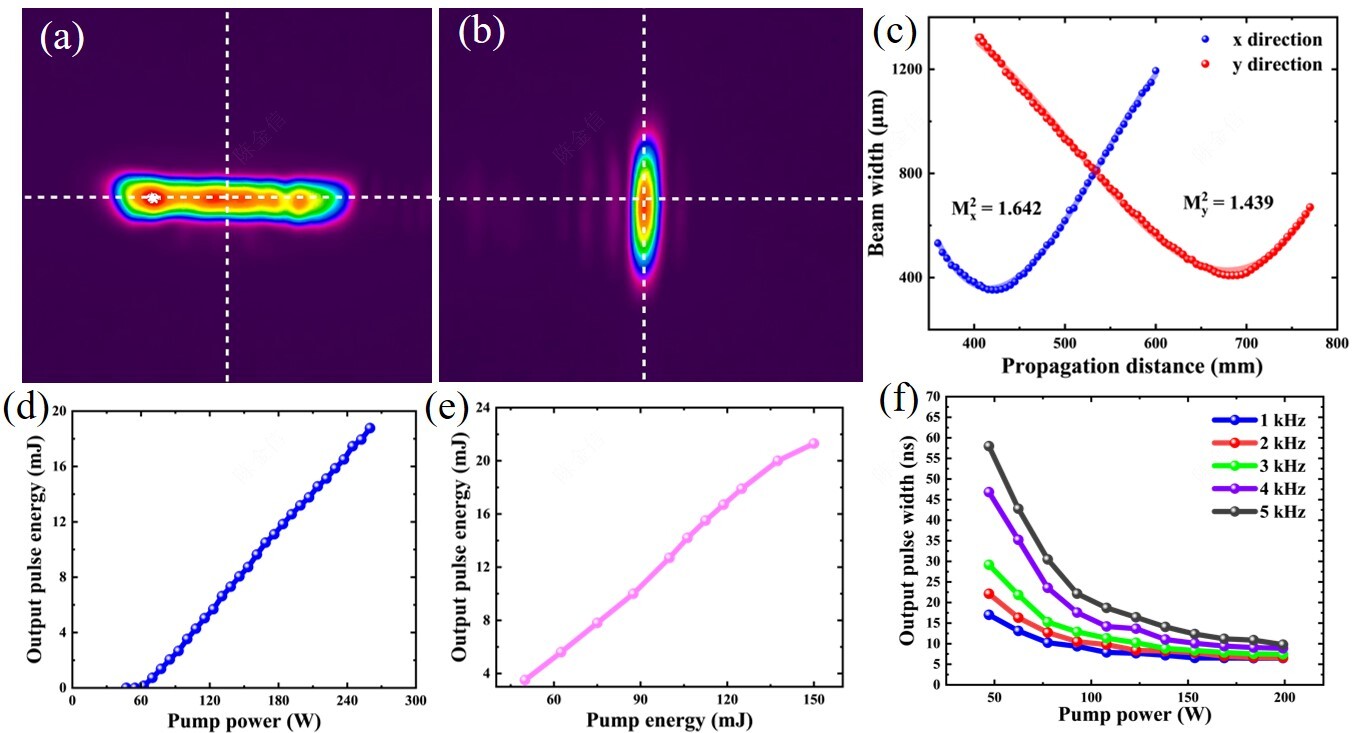
Fig. 2. Laser output characteristics include beam profile, output pulse energy and beam quality. (Image by CHEN Jinxin)