A research team led by Prof. WANG Hongzhi at the Hefei Institutes of Physical Science, Chinese Academy of Sciences, has found a novel role of prostaglandin E synthase 3 (PTGES3) in liver cancer, revealing how it drives both tumor growth and immune suppression.
The study was recently published in Molecular Biomedicine.
Hepatocellular carcinoma (HCC) is a highly lethal liver cancer with limited treatment outcomes. Understanding the key regulators of tumor progression and immune suppression is important for improving therapy.
In this study, PTGES3, a cytoplasmic co-chaperone of HSP90, was identified as a nuclear transcriptional regulator. It was significantly overexpressed in HCC and was associated with poor patient outcomes.
PTGES3 promoted the growth and spread of HCC cells through the PI3K/AKT/mTOR pathway. In a diethylnitrosamine (DEN)-induced mouse model, reducing Ptges3 in liver cells significantly suppressed tumor growth. Single-cell RNA sequencing further showed that lower Ptges3 levels reshaped the tumor immune environment, with fewer M2 macrophages.
PTGES3 activated SP1 by binding to its promoter, leading to increased TGF-β production. This promoted tumor growth and enhanced immune suppression. Blocking TGF-β signaling reversed these effects, suggesting that PTGES3 acted independently of its classical chaperone role.
The findings identify the PTGES3/SP1/TGF-β axis as a potential therapeutic target, offering new strategies for combining targeted therapy with immunotherapy in liver cancer.
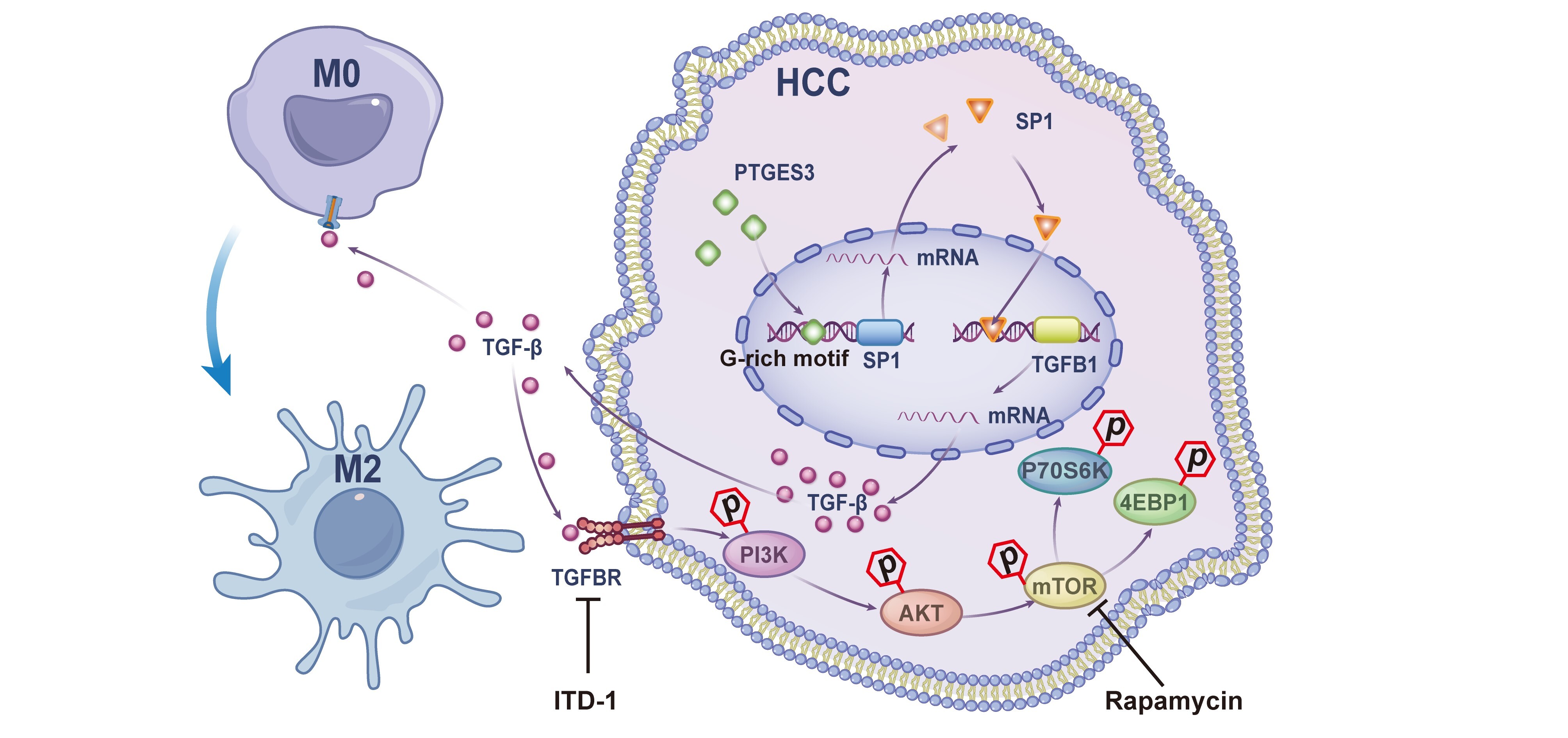
Schematic illustration showing the novel mechanism by which PTGES3 nuclear transcriptional regulation promotes hepatocellular carcinoma proliferation and immunosuppression. (Image by WANG Nianfei)