A research team led by Prof. ZHANG Hongwen at the Institute of Solid State Physics, Hefei Institutes of Physical Science, Chinese Academy of Sciences, has developed a portable surface-enhanced Raman spectroscopy (SERS) sensor that can rapidly detect trace amounts of sarin and other organophosphorus (OP) nerve agents.
The new sensor uses a specially designed molecular probe to recognize the P–C bond found in OP nerve agents. It can detect sarin in both liquid and gas phases, making it suitable for rapid on-site screening.
The findings were published in Chemical Engineering Journal.
OP nerve agents such as sarin are highly toxic, making rapid detection important for public safety, particularly at airports, border checkpoints and large public events. Current methods, including chromatography-mass spectrometry and ion mobility spectrometry, are accurate but often require bulky equipment and laboratory analysis, limiting their use for rapid on-site detection.
In this study, the researchers combined SERS technology with a molecular probe designed to selectively capture OP agents. The probe, pyridylamidoxime-mercapto (PAOM), contains an oxime group that reacts with the target molecules, while a thiol group helps attach the probe to the gold surface of the SERS chip. A pyridine ring also enhances the Raman signal, making small amounts of the target easier to detect.
The researchers tested three versions of the probe and found that the para isomer, p-PAOM, showed the strongest interaction with OP agents and the lowest reaction energy barrier.
Tests with a portable Raman spectrometer showed that the sensor could detect sarin in liquid samples in less than 20 seconds, with a detection limit of 10 ppb. It also showed good selectivity in the presence of common interfering substances.
The sensor remained effective at temperatures of up to 100 °C and across a pH range of 3 to 12, suggesting that it can be used under a wide range of environmental conditions.
The technology is now being further developed for technology transfer and industrial applications, according to the team.

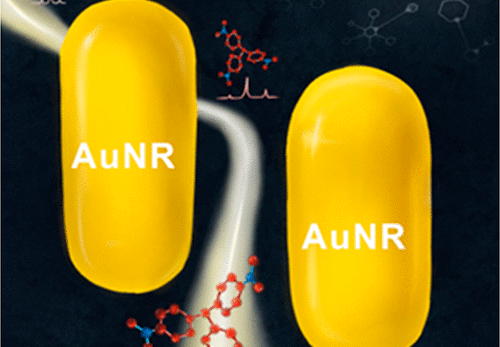
Establishment of a novel directed and precise recognition mechanism for target molecules based on the inherent characteristics of the P–C bond in organophosphorus agent molecules. (Image by ZHAO Qian)