




Prof. LI Hai’s team from the Hefei Institutes of Physical Science of the Chinese Academy of Sciences, has conducted a systematic evaluation of the reliability of speech acoustic features across consumer-grade mobile devices in a healthy population.

Recently, Prof. LI Hai from the Hefei Institutes of Physical Science of the Chinese Academy of Sciences, developed a novel multi-task learning framework, DEMENTIA, to improve the early detection and assessment of Alzheimer's disease (AD).

A group of researchers led by Prof. LI Hai from the Hefei Institutes of Physical Science of the Chinese Academy of Sciences revealed how working memory resources influence the balance between habitual and goal-directed strategies, with their findings published in the Journal of Cognitive Neuroscience (JoCN).

A recent study led by Professor YIN Huajie from the Hefei Institutes of Physical Science of the Chinese Academy of Sciences, introduces an innovative way to improve esterification reactions, which are key processes in industries like chemistry, perfumery, and pharmaceuticals.
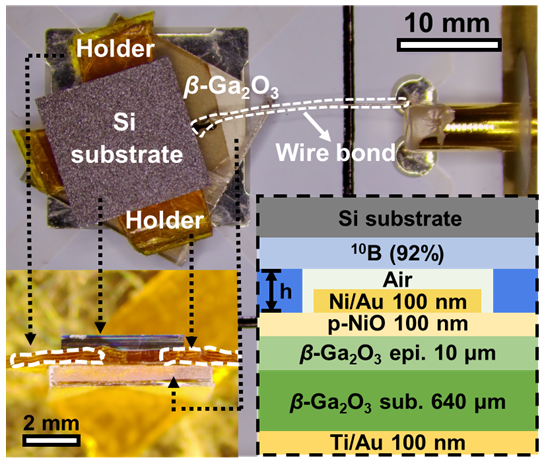
A collaborated team led by researchers from the Hefei Institutes of Physical Science of the Chinese Academy of Sciences have successfully developed advanced semiconductor-based radiation detectors, significantly improving their performance for use in extreme environments.