



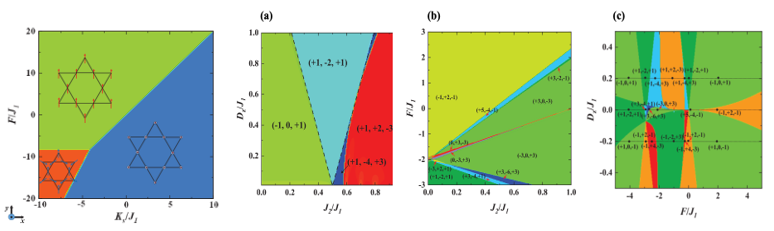
Recently, Prof. ZOU Liangjian' s group from the Institute of Solid State Physics, Hefei Institutes of Physical Science, Chinese Academy of Sciences, in collaboration with Professor LIU Dayong from Nantong University, has shown that multiple anisotropic magnetic interactions can give rise to a rich variety of topological magnon phases in two-dimensional Kagome ferromagnets, offering a new platform for the development of magnonic devices and potential applications in quantum information technologies.

Recently, a research team led by Prof. WANG Hongzhi and Prof. HONG Bo from the Hefei Institutes of Physical Science of the Chinese Academy of Sciences, in collaboration with Prof. WANG Wei from the First Affiliated Hospital of the University of Science and Technology of China, uncovered a key mechanism underlying chemotherapy resistance and metastasis in small cell lung cancer (SCLC). Their study shows that epigenetic silencing of the RASA4 gene plays a crucial role in driving disease progression.
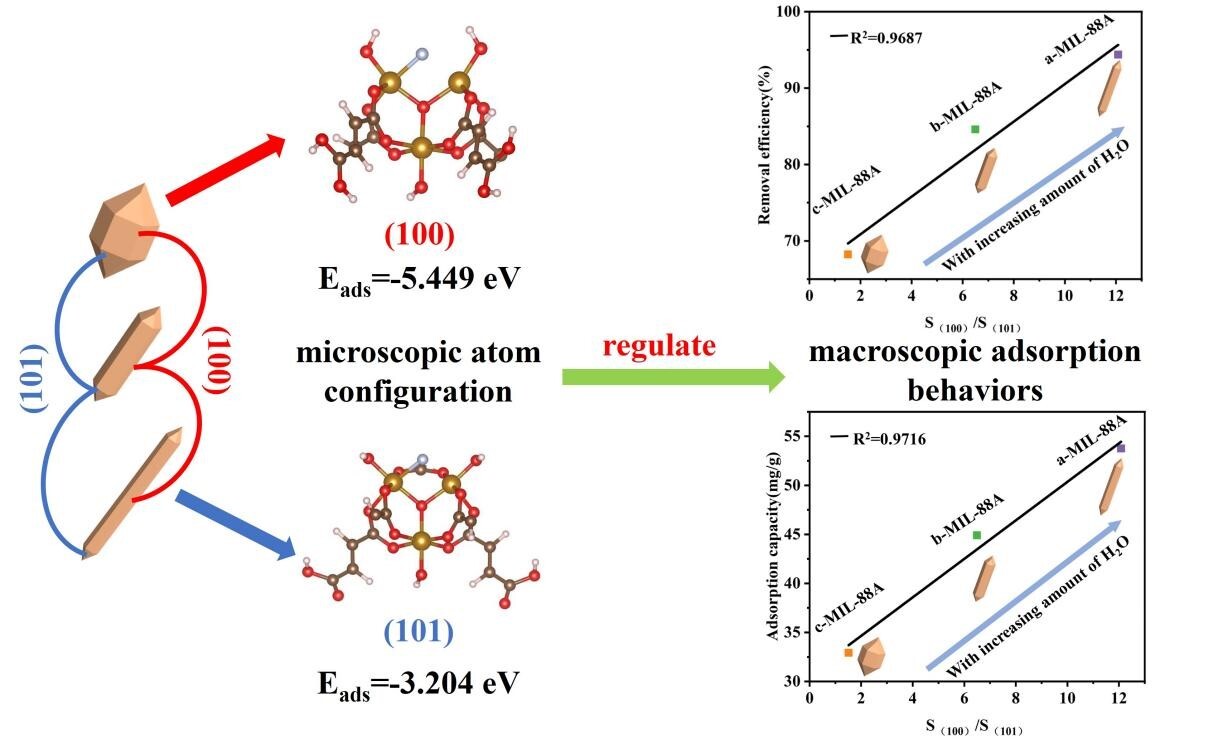
Recently, a research team led by Prof. KONG Lingtao at the Institute of Solid State Physics, Hefei Institutes of Physical Science, Chinese Academy of Sciences developed a new Metal–Organic Framework (MOF)-based material capable of efficiently removing fluoride ions from water while providing real-time visual detection.

Recently, a research team led by Prof. FANG Yonghua from the Hefei Institutes of Physical Science of the Chinese Academy of Sciences, developed a Raman spectroscopy gas detection system based on a double-cycle circular confocal cavity (C-CERS).

Recently, a research team led by Prof. FANG Yonghua from the Hefei Institutes of Physical Science, Chinese Academy of Sciences, proposed and systematically optimized a novel Parabolic Mirror Cavity-Enhanced Raman Spectroscopy (PMCERS) technique, achieving a marked improvement in gas detection sensitivity through the integration of advanced optical design and signal-processing methods.